

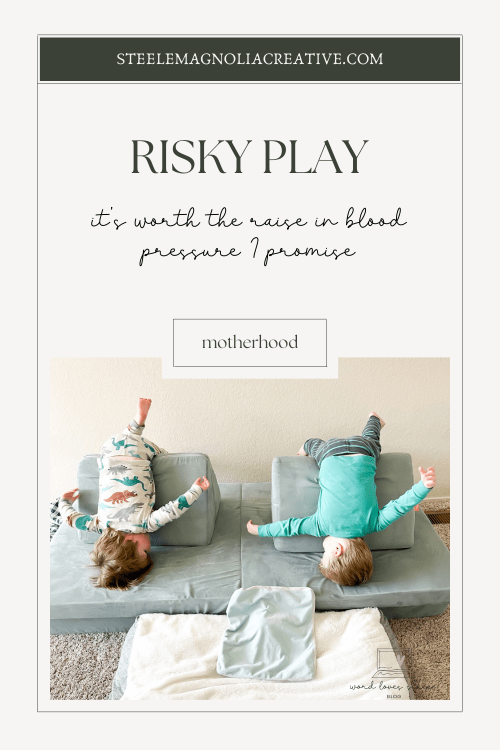
While scrolling Instagram one morning, a post about risky play from one of my favorite Montessori mama accounts popped up on my feed. She shared a new way to consider how we approach letting our toddlers explore by taking risks.
She explained how we should reframe the idea of keeping our children as safe as possible to as safe as necessary.
Before kids, I fully expected to be the “helicopter mom” because I was the anxious helicopter auntie. I recognize now that there is a different sense of responsibility for someone else’s kids. It’s as if the stakes are higher somehow.
Even though I ended up taking a different approach to risk-taking, it doesn’t mean I’m without anxieties and worry.
safe as necessary versus as safe as possible
We need to make the distinction to fully unpack the idea of as safe as necessary versus as safe as possible.
I’m not advocating for kids running barefoot over broken glass, putting their hands on a hot stove, or jumping off rooftops to learn those things will hurt you. That isn’t “risky play”; that’s risky behavior.
As parents, we have to ensure essential safety precautions are taken. Examples include requiring our children to sit in a car seat, holding hands in public places, or relocating dangerous items to an area out of reach.
Precautions are different than allowing a toddler to attempt to climb stairs on their own or walk along the edge of an elevated surface, bearing in mind that we are behind them as they climb or next to them as they walk to minimize injury.
Actual danger or perceived danger?
I am a mother living with anxiety, so it’s effortless for me to play out the worst-case scenario. As humans, our perception is often our reality, and we act accordingly.
Just remember, no one knows your kids better than you. You spend more time with them than anyone else. You know where their capabilities are and where they need help.
Taking a step back to evaluate whether something is actually as dangerous as you perceive it to be is a necessary part of risky play.
accepting the truth about safety
The visceral need to protect our young is coded into our DNA. At the core, its purpose is to keep the species thriving.
However, it’s impossible to protect our children from everything. At some point, they will get hurt. This doesn’t mean we give up and take an “eff it” approach either.
I’m not recommending you just let your toddler do whatever strikes their fancy, their safety be damned, while you sit back and watch it unfold. You are still there as a parachute to break the fall and minimize harm.
Understanding that natural consequences during the learning process are inevitable helps when it comes to risky play.
natural consequences make the best teachers
How often have you told your toddler, “don’t do that, you’re going to get hurt,” only have them do the thing and then get hurt?
Toddlers need natural consequences to learn limits.
Attempting to explain or rationalize a possible bad situation to a toddler will not have the same impact as an immediate cause and effect experience. I say “attempt” because a toddler doesn’t have the cognitive capabilities to process that type of information.
A toddler understands, “I fall, I get hurt.”
Once your tot starts walking, they will push the boundaries of what this new ability can do. A prime example is when your newly mobile babe wants to go up a flight of stairs on foot but can’t remain balanced so instead returns to crawling.
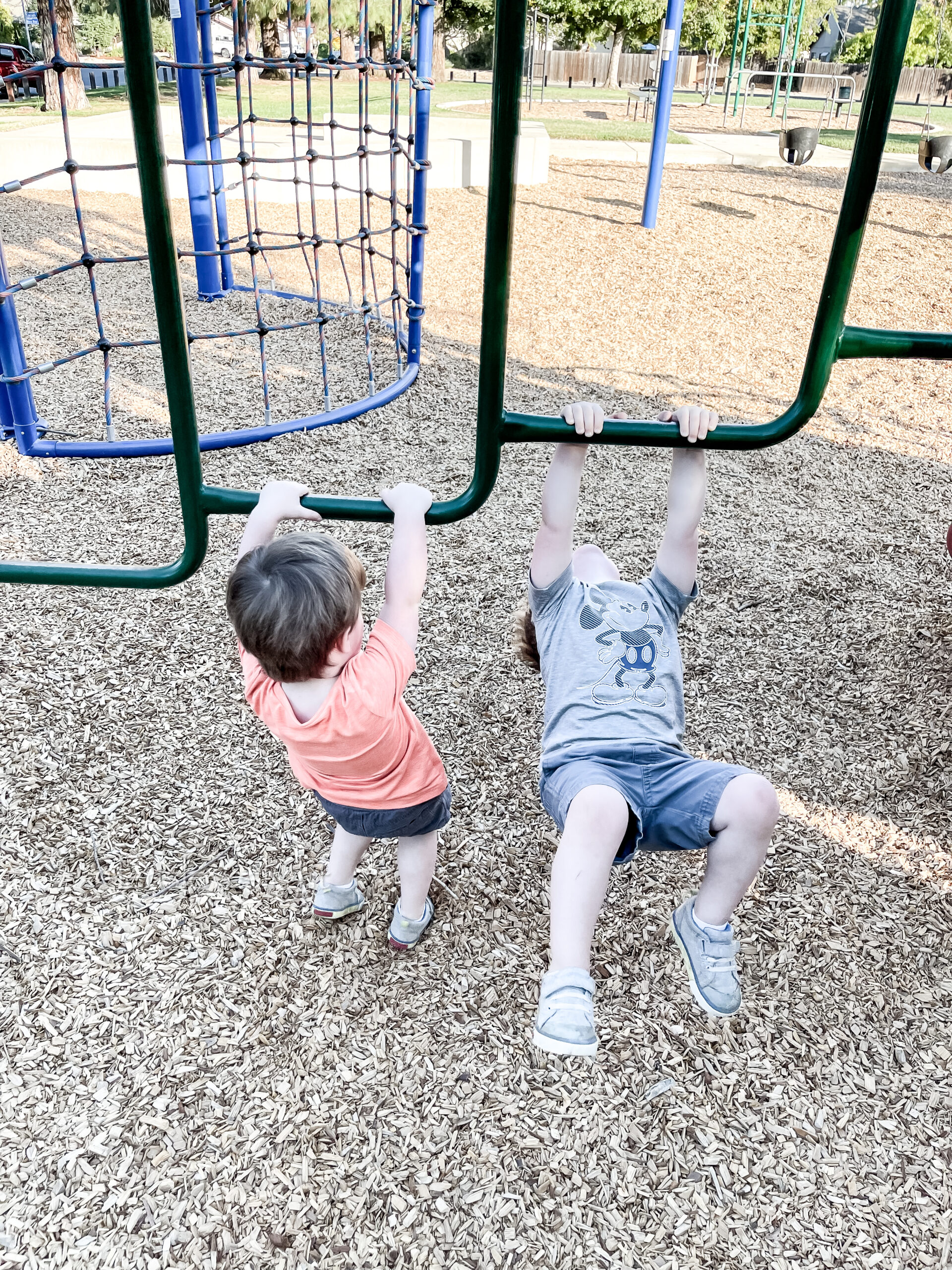
Uncontrolled Play Is Not Risky Play
There is a distinctive difference between a controlled toddler testing the limits of their bodies and an uncontrolled toddler throwing caution to the wind because they’re excited.
A controlled toddler is cautious, focused, and curious. They tend to move slower, observing how each movement affects their stability. They are aware that a wrong move might cause a negative outcome.
An uncontrolled toddler throws their bodies about with abandon without worrying about consequence. They move quicker, not paying attention to their surroundings, with no awareness.
Twin escalation syndrome is a daily occurrence in my home. Once one starts to get a little wild, the other feeds the flame, which then, amps the first again and builds the energy to a reckless level.
When this happens, it’s best to lower the energy and redirect to less active play.
It's going to make you uncomfortable,
As a mother, you will do anything for your tot(s); the hardest thing to do is nothing.
If the idea of allowing your toddler to participate in risky play makes your heart race, me too. I spend a significant amount of time quietly talking myself down so my boys can continue to experience new challenges and grow.
If we don’t allow our kids to become comfortable taking risks, they won’t develop the confidence to succeed.
You may spend a significant amount of time in a place of discomfort to allow these risk-taking endeavors, especially in the beginning. As time goes on, you will witness your toddler’s development; hopefully, this will ease some of your worries.
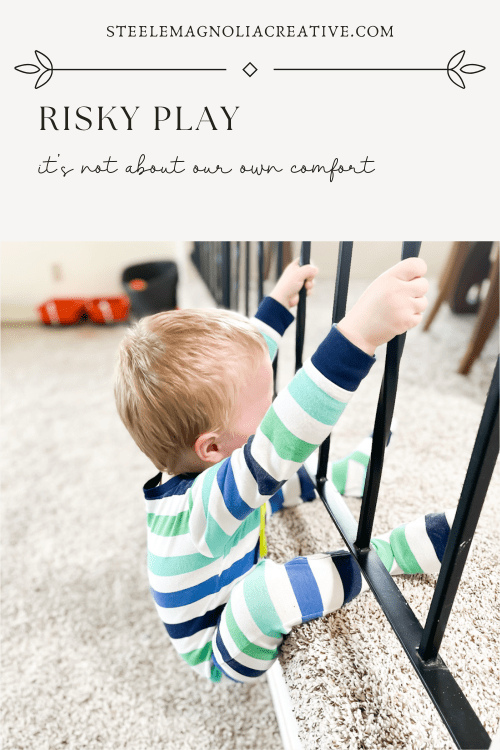
Risky play can be a challenging concept to make peace with. The thought of your child hurting is heartbreaking, and it’s only natural to want to prevent it.
However, allowing toddlers the space to learn from their own experiences will ultimately build their confidence for more significant life challenges.
We are always here to catch them when they fall.